Chimneys rarely fail all at once. They wear out gradually, and most problems give clear signs long before they become dangerous or expensive. The trick is knowing what to look for.
Below are ten common warning signs, what usually causes them, and how urgent they are. Use this list as a guide, not a diagnosis — some problems can only be confirmed with a closer inspection.
1. Crumbling or missing mortar
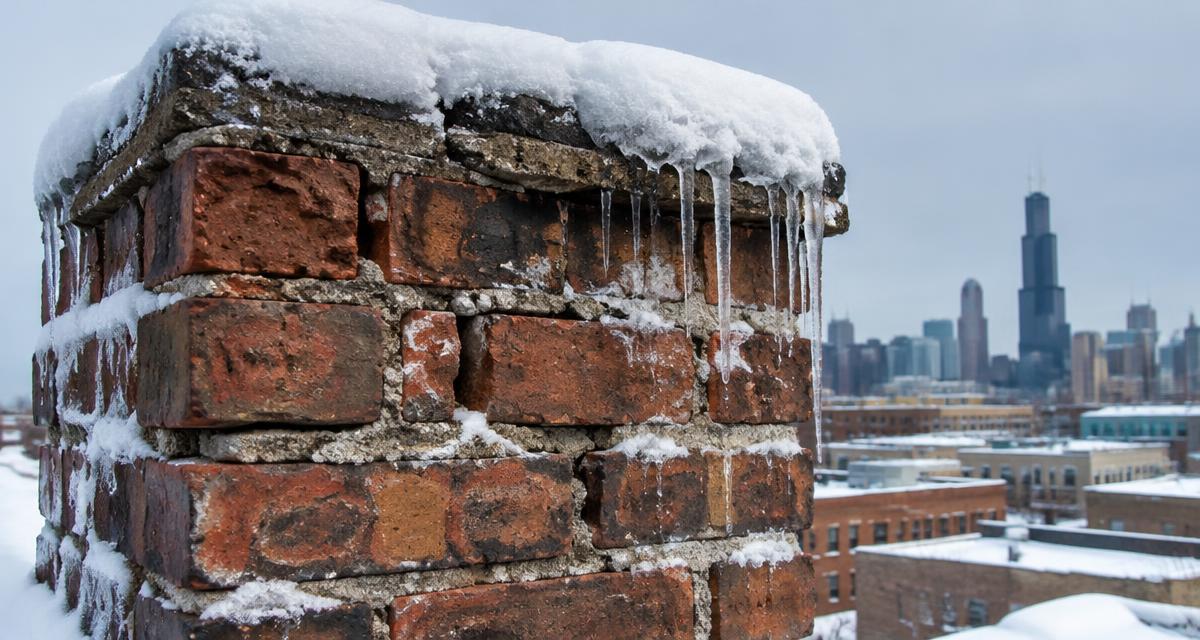
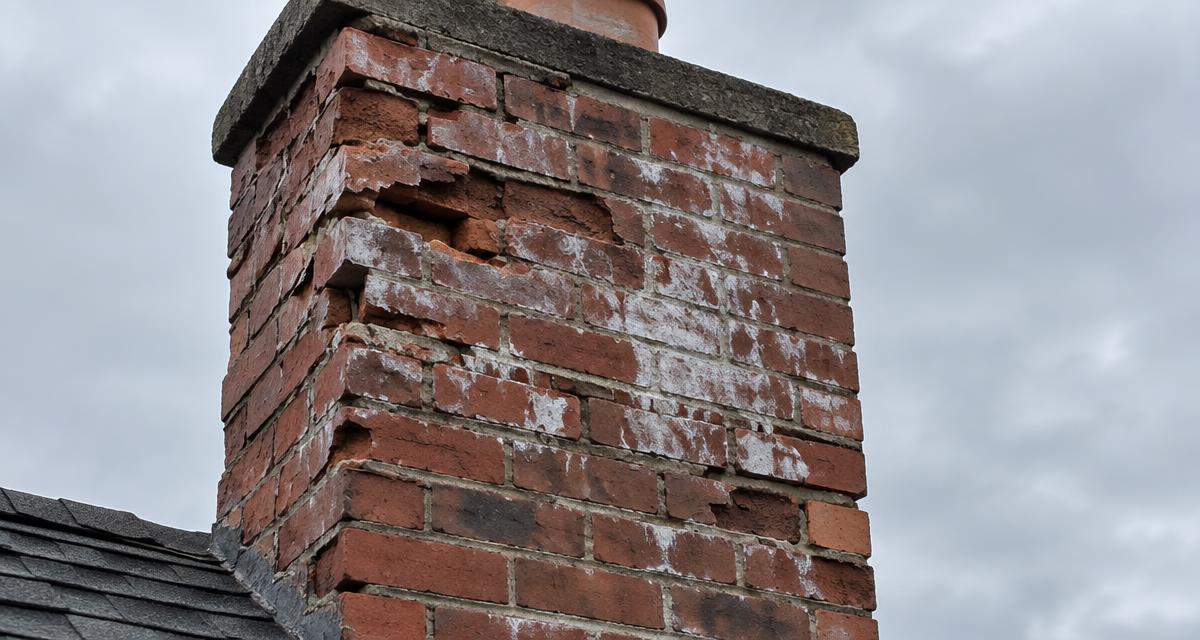
What you'll see: Gaps between bricks, sandy mortar on the roof or ground, or joints recessed well behind the brick face.
What it means: Mortar is the weak point in masonry and wears faster than brick, especially in Chicago's freeze-thaw cycles. Once joints open up, water gets in and damage speeds up.
Fix: Tuckpointing — grinding out failed mortar and replacing it.
2. Spalling brick
What you'll see: Brick faces flaking, peeling or popping off, with chunks of brick on the roof.
What it means: Water inside the brick has frozen and expanded. Spalling usually points to long-term moisture problems, often from a cracked crown or missing cap.
Fix: Replace damaged bricks and correct the moisture source. Read more in chimney damage after Chicago winters.
3. White staining (efflorescence)
What you'll see: White, chalky patches on the outside of the chimney or on the chimney breast inside.
What it means: Water is moving through the masonry and leaving salts behind when it evaporates. Efflorescence itself is cosmetic, but the water causing it isn't.
Fix: Find and stop the water entry, then clean the brick. Breathable waterproofing may help once repairs are done.
4. A cracked or crumbling chimney crown
What you'll see: Often nothing from the ground. From a ladder or photo, you may see cracks across the concrete top or pieces breaking away.
What it means: The crown is the chimney's roof. When it cracks, water drains straight into the masonry and around the flue.
Fix: Seal minor cracks or rebuild the crown. See our chimney crown repair guide.
5. Rust on the damper or firebox
What you'll see: Rust flakes in the firebox, a damper that sticks, or rust stains on metal parts.
What it means: Moisture is entering from above — commonly a missing cap or a failing crown.
Fix: Install a chimney cap, repair the crown and replace the damper if it's corroded.
6. Water stains near the chimney
What you'll see: Brown stains or peeling paint on walls or ceilings near the chimney, or damp spots in the attic.
What it means: A leak somewhere in the chimney system — crown, masonry, cap or the area where the chimney meets the roof.
Fix: Trace the leak before repairing. Our chimney leak guide explains the common sources.
7. Pieces of flue tile in the fireplace
What you'll see: Thin, curved pieces of clay tile or flakes of liner material in the firebox.
What it means: The flue liner is breaking down. A damaged liner can let heat and combustion gases reach parts of the house they shouldn't.
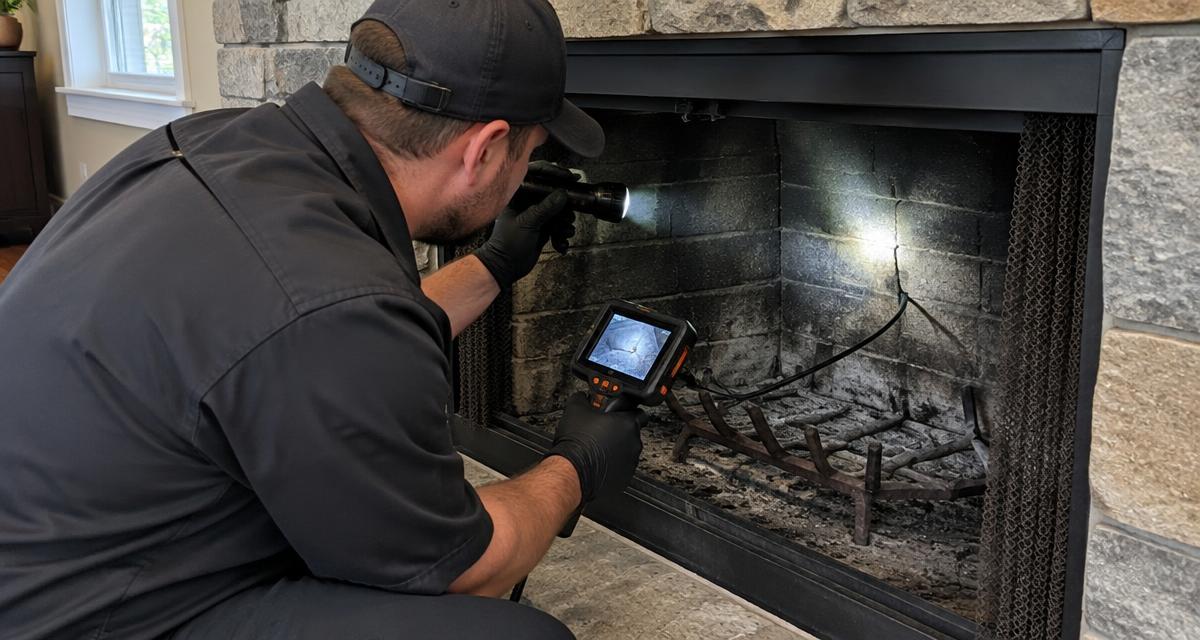
Fix: A camera inspection to assess the liner, followed by repair or relining if needed. This is a safety issue — stop using the fireplace until it's checked.
8. Strong smells from the fireplace
What you'll see (or smell): A smoky, tar-like or musty odor, often worse in humid weather or when the air conditioning runs.
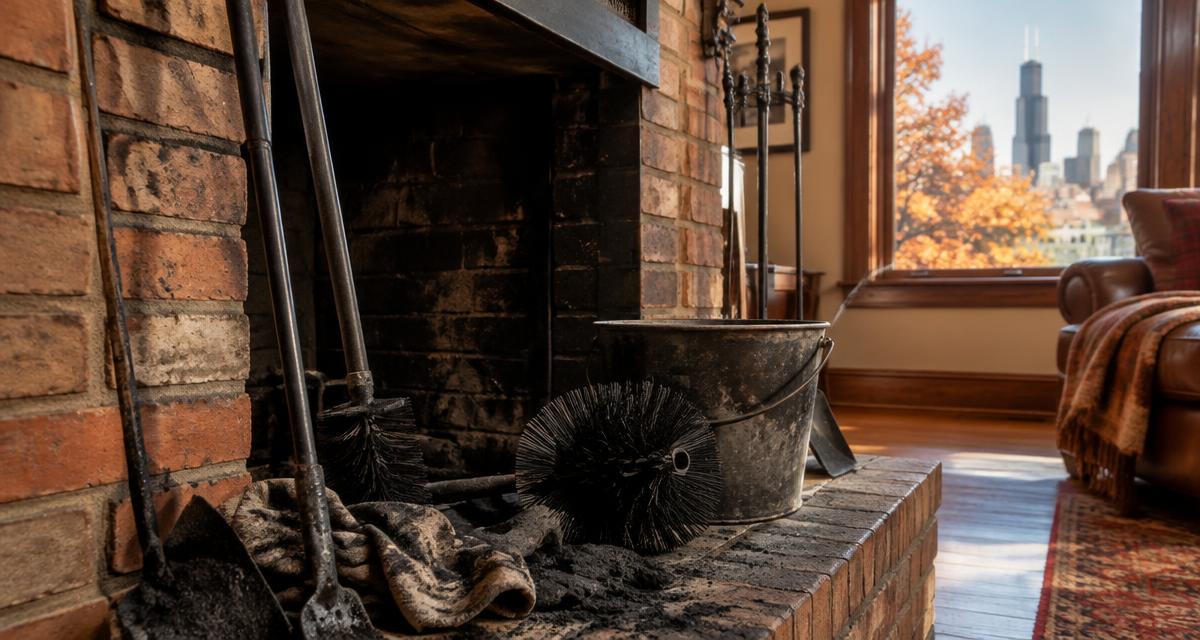
What it means: Usually creosote buildup, moisture in the chimney or debris such as a nest.
Fix: A chimney sweep and inspection. A cap and top-sealing damper can help with ongoing odors.
9. Smoke coming into the room
What you'll see: Smoke spilling out of the fireplace instead of rising up the flue.
What it means: A blockage, heavy creosote, a closed or broken damper, or a draft problem caused by the chimney's design or the home's air pressure.
Fix: Inspection and sweep first, then targeted repairs.
10. A leaning or separating chimney
What you'll see: The chimney tilts away from the house, or there's a visible gap where it meets the roof or wall.
What it means: Structural movement — from failed mortar, footing problems or long-term water damage.
Fix: This is urgent. A leaning chimney can collapse. Stay clear of the area and call for an inspection right away.
What to do if you spot a sign
- Take photos so you can show the problem and track changes.
- Stop using the fireplace if you see liner pieces, signs of a chimney fire or structural movement.
- Schedule a professional chimney inspection.
Most of these problems are fixed through standard masonry and chimney repair. The earlier you catch them, the smaller the job usually is.
If you've noticed any of these signs, request a free quote or give us a call. We'll take a look, show you photos and explain your options plainly.