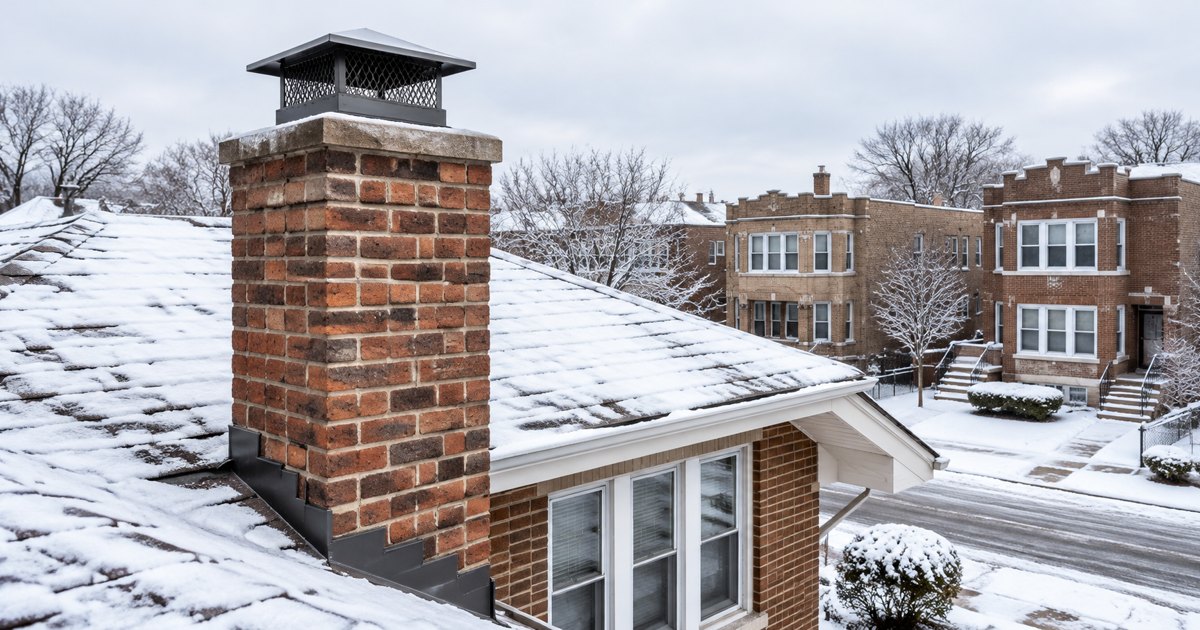
Look up at the chimneys on your block and you'll notice something: some have a metal cap on top, and some are just open flue tiles. The open ones are an invitation for rain, snow, leaves, birds and raccoons.
A chimney cap is one of the least expensive chimney upgrades and one of the most useful. Here's why.
What a chimney cap does
Keeps water out
Without a cap, rain and snow fall straight into the flue. That water:
- Rusts the damper and firebox parts
- Soaks the smoke chamber and masonry
- Mixes with soot and creosote to create odors
- Contributes to freeze-thaw damage inside the chimney
A cap also shelters the crown around the flue, which helps prevent cracks. See chimney leaks: common causes and repair.
Keeps animals out
Raccoons, squirrels and birds all see an open chimney as a safe, warm place to nest — and Chicago has plenty of all three. Nests can block the flue, which is a fire and carbon monoxide hazard. Animals can also get stuck, die in the chimney or find their way into the house.
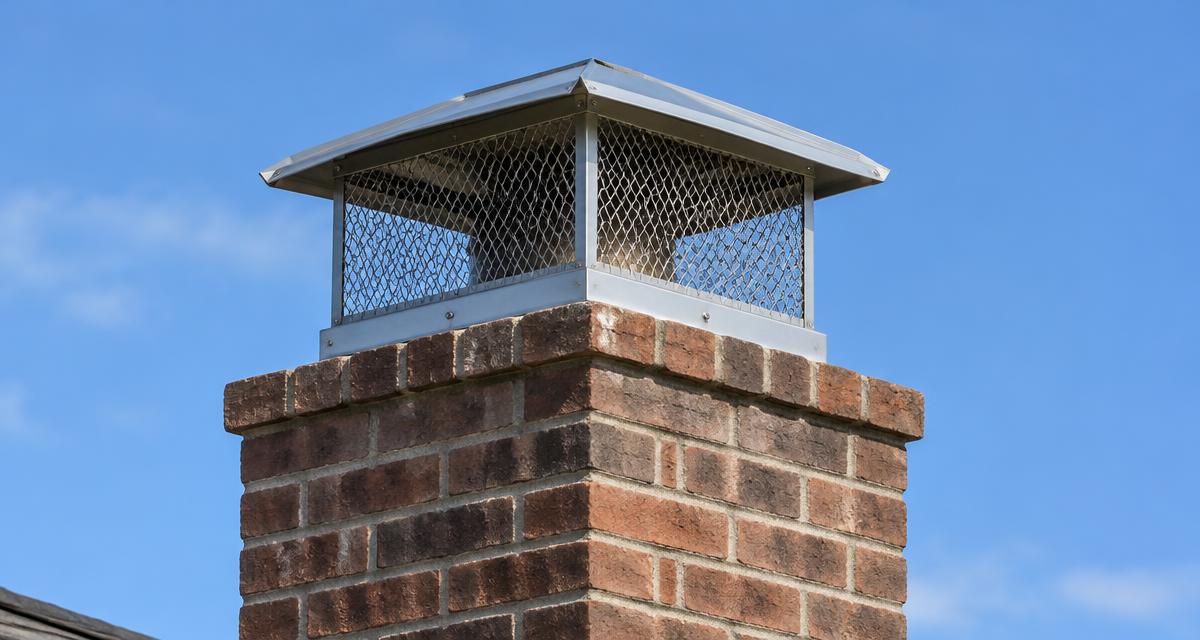
A cap with a mesh screen keeps them out for good.
Stops sparks and embers
The mesh on a cap acts as a spark arrestor, reducing the chance that a hot ember lands on your roof, a neighbor's roof or nearby trees.
Keeps debris out
Leaves, twigs and windblown trash can collect in an open flue and block it. A cap prevents most of that.
Reduces downdrafts
On windy days, especially in open areas or near the lake, a cap can help reduce wind blowing down the flue.
Types of chimney caps
Single-flue caps
Fit over one flue tile. Common on smaller chimneys with one fireplace or appliance.
Multi-flue caps
Cover the entire top of a chimney that has several flues — common on older Chicago homes with a fireplace and furnace sharing one chimney.
Custom caps
Built to fit unusual chimney shapes or sizes.
Materials
- Stainless steel: durable and long-lasting.
- Copper: long-lasting with a distinctive look that weathers to a patina.
- Galvanized steel: cheaper up front but tends to rust much sooner.
We install stainless steel and copper caps, sized to your chimney. See our cap and damper installation service.
Caps and top-sealing dampers
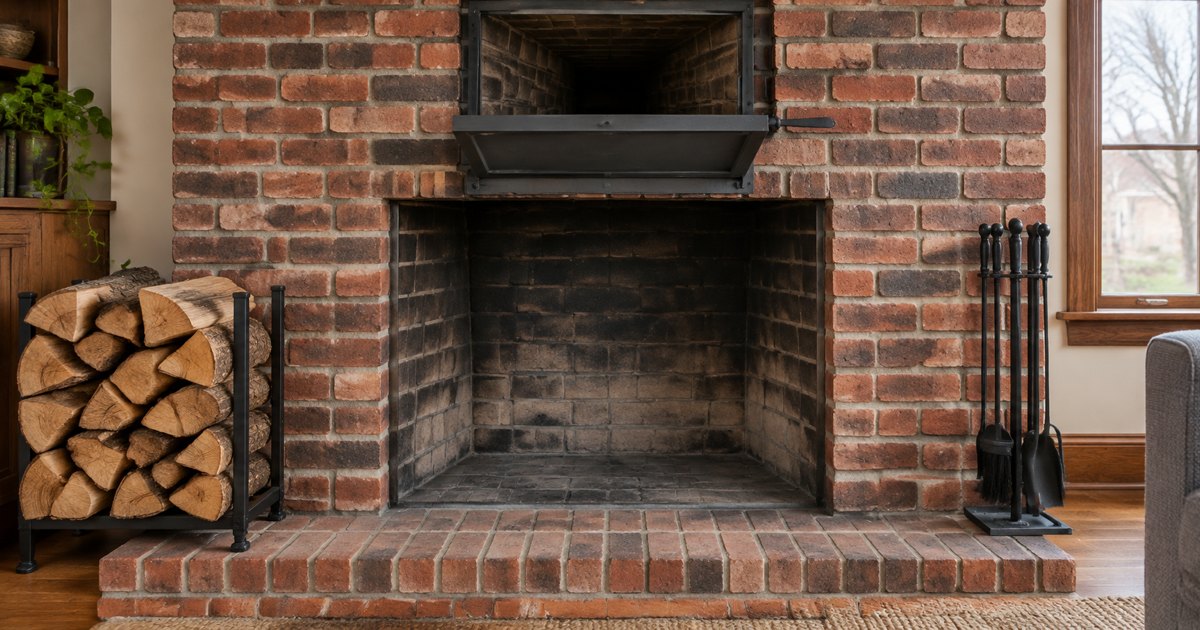
Many older fireplaces have a cast-iron throat damper just above the firebox. Over time these rust, warp and stop sealing, letting warm air escape all winter.
A top-sealing damper mounts at the top of the chimney and closes with a cable from the firebox. It combines a cap with a tight seal, so it:
- Keeps cold air out when the fireplace isn't in use
- Keeps animals and rain out
- Helps reduce summer chimney odors
Signs your cap is missing or failing
- You can see open flue tile at the top of the chimney
- The cap is rusted, bent or leaning
- The mesh is torn or clogged with debris
- You hear animals in the chimney
- Water is getting into the firebox
Check out signs your chimney needs repair for more warning signs.
Sizing matters
A cap that's too small or too short can restrict draft and cause smoke problems. A cap that isn't properly fastened can blow off in a storm. Proper installation means measuring the flue and crown, choosing the right style and securing it correctly.
When to install a cap
Any time of year works, but many homeowners schedule it:
- During their annual chimney sweep
- After removing an animal from the chimney
- Alongside crown repair or tuckpointing
Protect your chimney
If your chimney is open at the top, a cap is one of the simplest ways to protect it. Request a free quote or call us and we'll recommend the right size and style for your home.