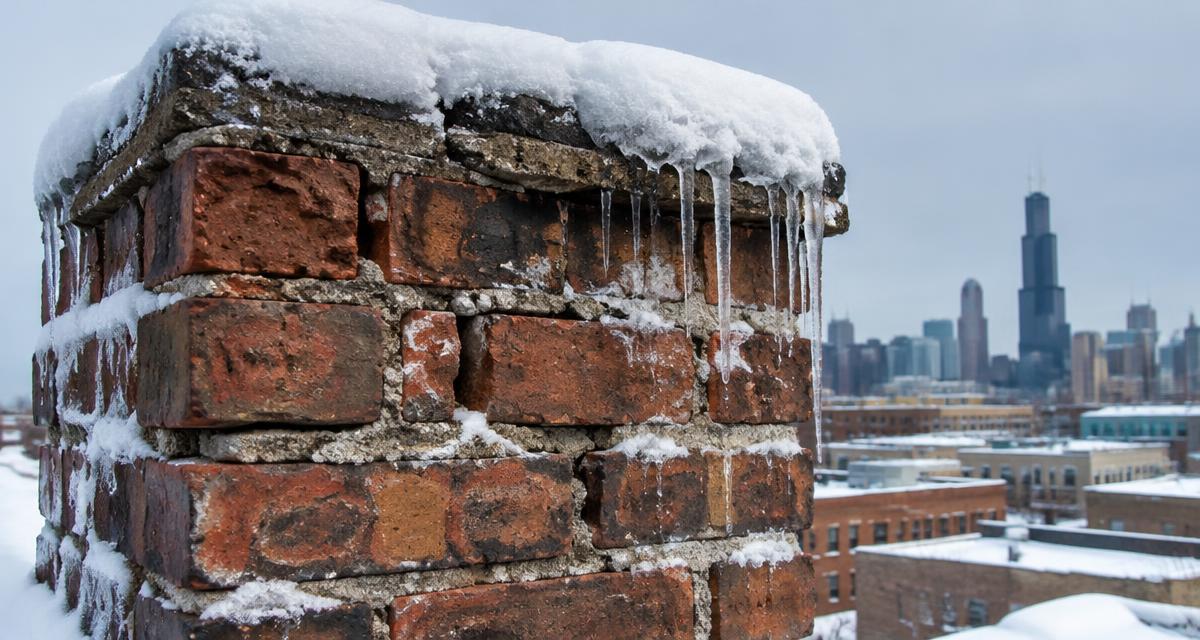
Chicago winters don't just bring cold — they bring constant swings above and below freezing. Snow melts on a sunny afternoon, the water soaks into brick and mortar, and by nightfall it freezes again. Repeat that through a whole season and even a well-built chimney starts to show wear.
This article explains how freeze-thaw damage happens, what it looks like, and what you can do about it before small problems become big repairs.
How freeze-thaw damage works
Brick and mortar are porous. They absorb water the way a sponge does, only more slowly. When that water freezes it expands, pushing outward from inside the material. When it thaws, the water moves deeper into the newly opened gaps. The next freeze pushes a little harder.
Over months and years this cycle:
- Washes out and cracks mortar joints
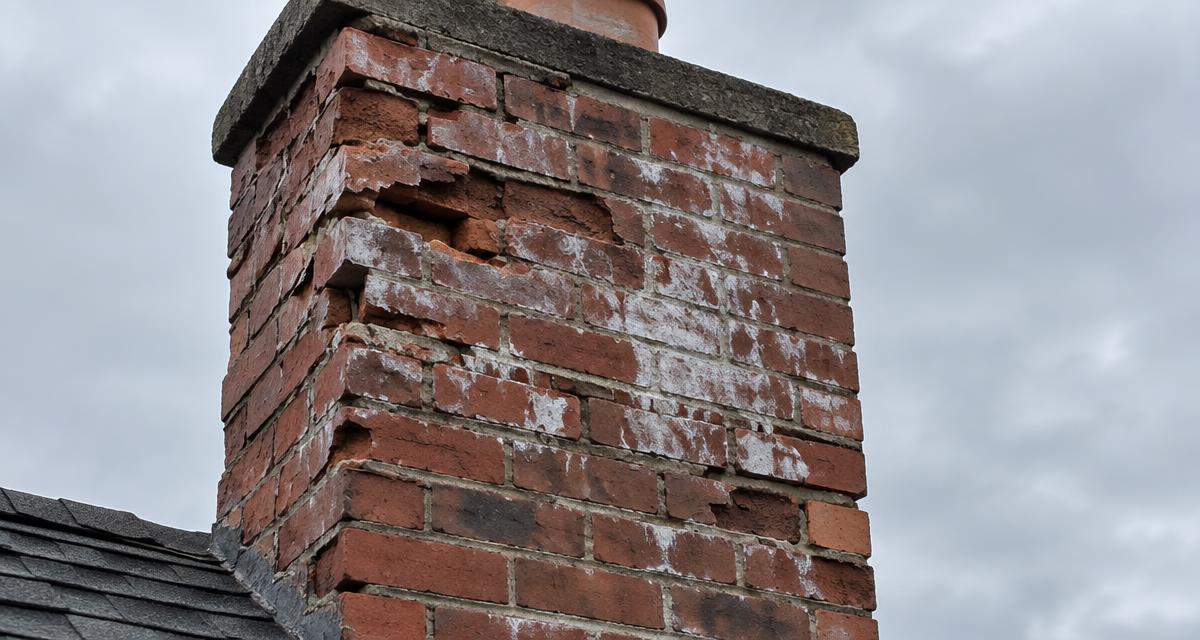
- Pops the face off bricks (called spalling)
- Widens cracks in the concrete chimney crown
- Loosens the seal around the flue tile
- Lets water into the flue, attic and walls
Chimneys are especially exposed because they stick up above the roofline, catch wind-driven rain and snow on all four sides, and have no roof to shelter them.
Why Chicago chimneys get hit hard
Several local factors stack up:
- Long shoulder seasons. Late fall and early spring bring repeated freeze-thaw days.
- Older masonry. Many chimneys on Chicago two-flats, bungalows and greystones were built with softer, lime-based mortars and older brick that absorbs more water.
- Lake effect wind and moisture. Homes near the lakefront, like those in Edgewater, face more wind-driven moisture.
- Deferred maintenance. Chimneys are easy to forget because you rarely see the top of them.
Signs of winter damage to look for in spring
Once the snow is gone, walk around your house with binoculars or take photos from the street. Look for:
On the outside
- Crumbling or missing mortar between bricks, especially near the top
- Brick faces flaking or popping off and pieces of brick on the roof or ground
- White, powdery staining (efflorescence), which means water is moving through the masonry
- A leaning chimney or gaps where the chimney meets the roof
- A rusted, bent or missing chimney cap
On the inside
- Water stains on walls or ceilings near the chimney
- Damp or musty smell from the fireplace
- Rust on the damper or firebox components
- Flakes of tile or mortar falling into the firebox
Any of these is a good reason to schedule an inspection. We list more warning signs in signs your chimney needs repair.
Repairs that stop the damage
The right fix depends on what's failing, but common repairs include:
Tuckpointing
Removing deteriorated mortar and replacing it with fresh mortar matched to the existing brick. This restores the weather seal and keeps bricks locked in place. See our tuckpointing guide.
Crown repair or rebuild
The crown is the concrete or mortar slab on top of the chimney. Hairline cracks can sometimes be sealed; badly broken crowns need to be rebuilt with a proper overhang so water drips clear of the brick. Learn more in our chimney crown repair guide.
Brick replacement
Spalled bricks are cut out and replaced. Where damage is extensive, a partial rebuild of the top section may be needed.
Chimney cap
A cap keeps rain and snow from falling straight into the flue and protects the crown. It also keeps out birds and raccoons. See why a chimney cap matters.
Breathable waterproofing
Once the masonry is sound, a vapor-permeable water repellent reduces how much water the brick absorbs. It must be breathable — sealing brick with paint or non-breathable coatings can trap moisture and make spalling worse.
All of these are part of our masonry and repair service.
Why waiting costs more
Freeze-thaw damage is progressive. A few open mortar joints this spring become loose bricks next year, and loose bricks eventually mean rebuilding the top of the chimney. Water that gets past the masonry can also damage framing, drywall and the flue liner. Catching problems early almost always means a smaller, simpler repair.
A simple yearly routine
- Spring: look the chimney over from the outside after the snow melts and note any changes.
- Summer: schedule repairs while the weather is warm and dry enough for mortar to cure.
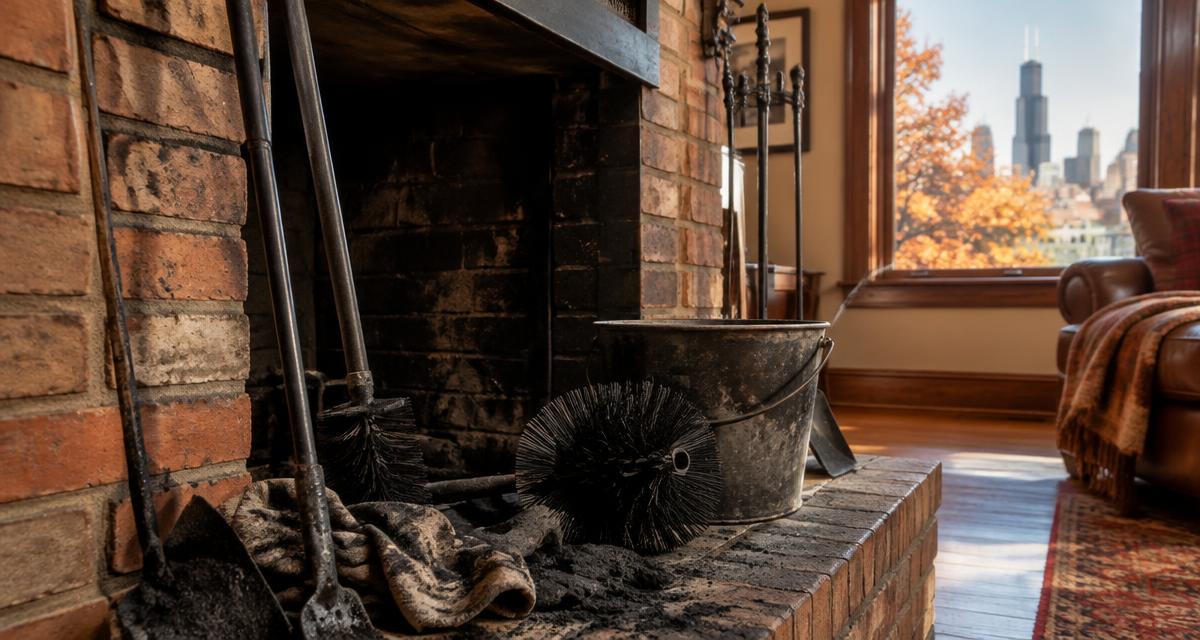
- Late summer or early fall: have the chimney swept and inspected before you start using the fireplace.
- Winter: watch for leaks, smells or drafts and call if something changes.
Get a professional opinion
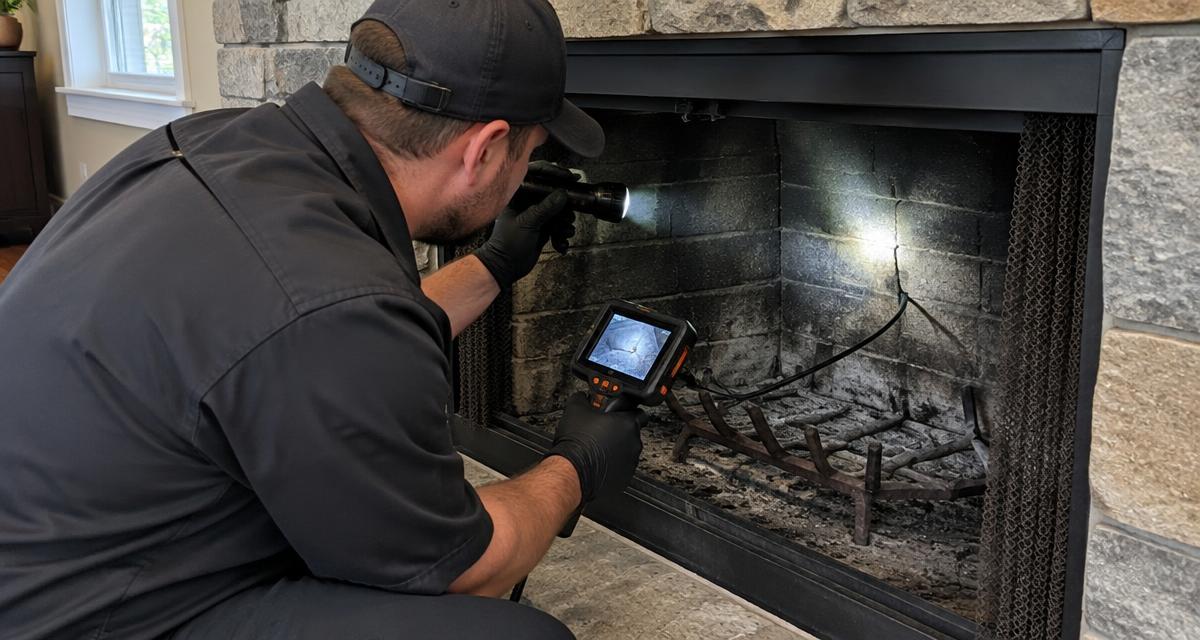
It's hard to judge a chimney from the ground, and roofs aren't a safe place for most homeowners. If you've noticed any of the signs above, request a free quote or call us. We'll inspect the chimney, show you photos of what we find and explain your options.