Before lighting the first fire of the season, confirm that your chimney has had its annual inspection and that any recommended safety work is complete. After that, focus on dry fuel, proper appliance operation and changes in performance. A calendar is useful, but smoke entering the room, a carbon monoxide alarm or a suspected chimney fire takes priority over any maintenance schedule.
Chicago Chimney Pros serves older brick homes, bungalows and multi-unit buildings in Chicago, along with the North Shore and northwest suburbs listed on our service-area page. This guide is a practical way to organize maintenance without trying to diagnose a hidden flue problem from your living room. It separates what you can observe safely from work that belongs to a qualified professional.
First, know which system you have
An open masonry fireplace, wood stove, factory-built fireplace and gas appliance do not share identical operating instructions. Identify the appliance and keep its manual available. A metal chimney serving a listed appliance must be maintained according to its listing and instructions; advice about brick waterproofing does not automatically apply to it.
In an older Chicago two-flat, a single brick chimney stack may contain several separate flues. One may serve a fireplace while another vents heating equipment. Do not assume that a clean fireplace flue proves the other passage is sound. Ask the inspector to identify which appliances connect to which flues and document the scope of the visit.
If you cannot identify the system, do not experiment with fuel or accessories. Bring photographs of the unlit firebox and any appliance label to the conversation, taken from a safe location.
Before fireplace season: arrange the annual inspection
The EPA's wood-burning installation and maintenance guidance recommends professional inspection of the appliance, chimney and vent each year. An inspection and a cleaning are related but different: inspection evaluates condition, while cleaning removes deposits and obstructions. A recently swept chimney can still have damaged liner joints or an unsuitable appliance connection.
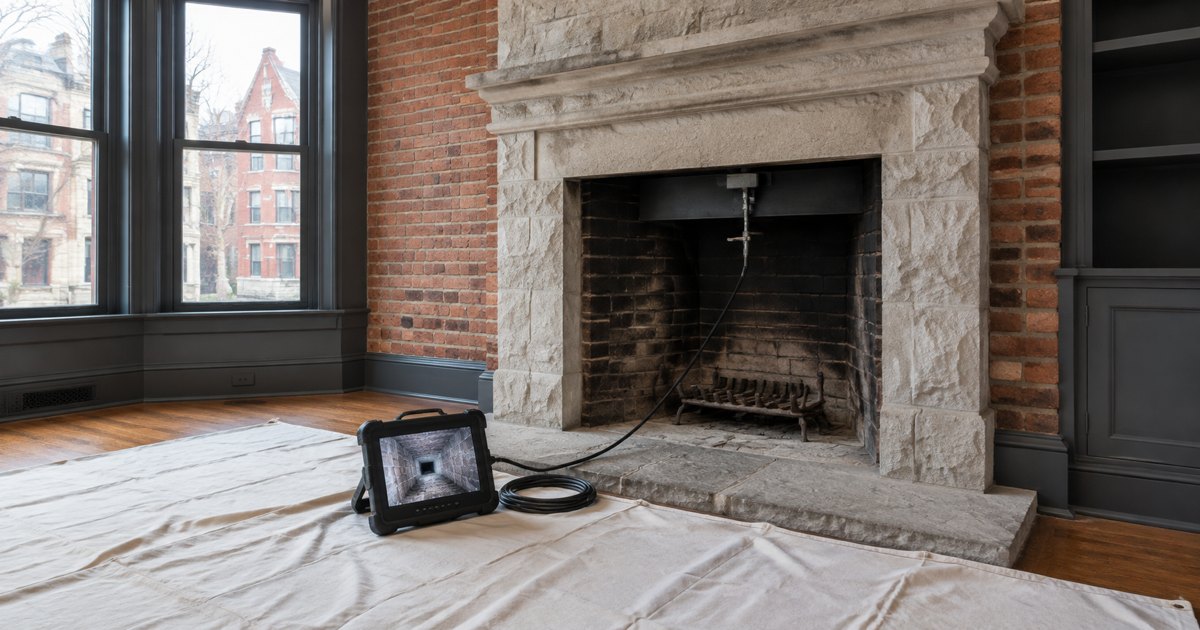
Tell the inspector about smoke problems, water stains, unusual odors, appliance changes and any known fire or storm incident. Those details help determine the appropriate inspection level. Read our guide to chimney inspection levels before booking so you can ask about the difference between an accessible examination and a video scan.
Request a written report that identifies the system inspected, findings, limitations and recommended next steps. Ask which concerns must be addressed before use and which are preventive maintenance. Keep that report with your appliance manual rather than relying on a verbal summary months later.
Ground-level checks before the first fire
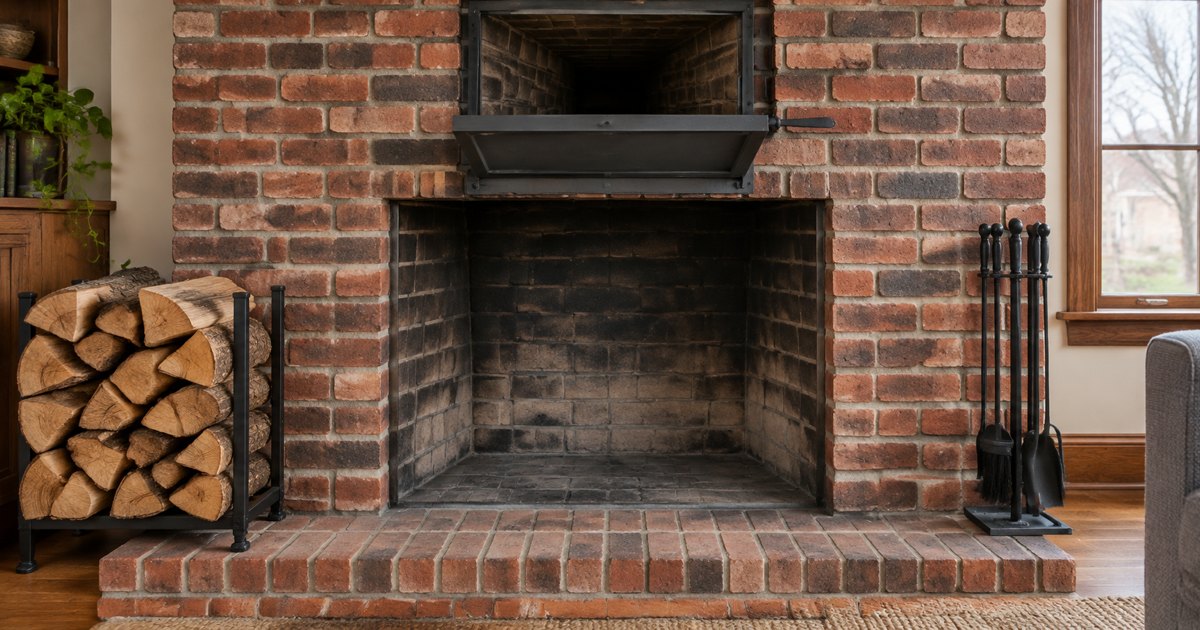
With the fireplace completely cold, look for loose pieces in the firebox, unexpected debris and visible damage to accessible surfaces. Check the damper only as directed by the appliance instructions. If it is stuck, missing or difficult to operate, arrange service rather than forcing it.
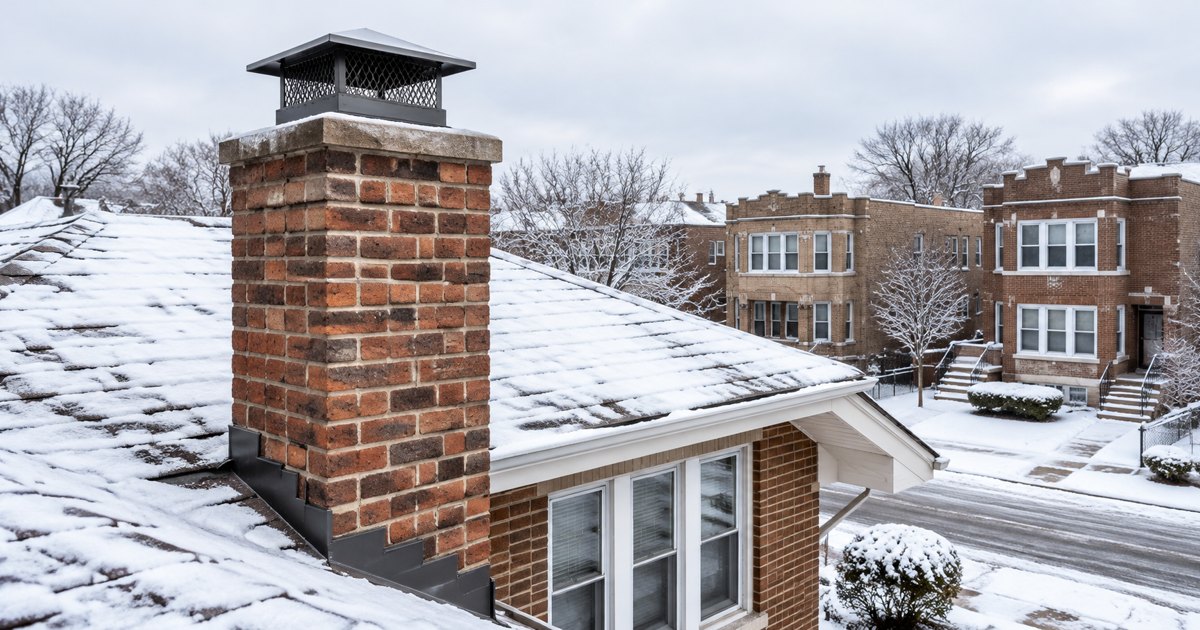
From the ground, look for a visibly missing cap, displaced metal components, loose brick or a new lean. You do not need to climb onto a roof to make these observations. Snow, ice and wet roof surfaces make that especially unsafe. A distant visual check cannot establish the condition of the crown, flashing or liner.
Test smoke and carbon monoxide alarms according to their manufacturers' instructions. Verify their placement, replacement dates and battery requirements using the instructions for your exact devices. An alarm is an additional safeguard, not permission to use a chimney with unresolved defects.
Prepare firewood for damp and cold weather
The EPA's best wood-burning practices recommends dry, split, seasoned wood and a moisture content below 20 percent. Store firewood outdoors off the ground, with the top covered and the sides open so moisture can escape. Test a freshly split face with a moisture meter rather than judging only the dry-looking outside.
A pile brought in from a snowy yard can have surface moisture even when the wood underneath is seasoned. Follow your appliance instructions and avoid treating a smoky start as normal. Do not burn wrapping paper, trash, treated wood or materials the appliance manufacturer prohibits.
In a compact bungalow or apartment, do not let convenient storage create a heat hazard. Keep wood, furniture, decorations and other combustibles outside the clearances required for the fireplace or appliance. A holiday mantel arrangement should not interfere with those clearances.
During winter: watch for changes, not just buildup
Keep a short record of unusual behavior: smoke on startup, smoke after an exhaust fan runs, odors during a thaw, falling debris or a damper that suddenly behaves differently. Note the weather and which appliances were operating. Those observations are more useful than a guessed diagnosis such as a bad cap.
If smoke spills into the room, stop using the fireplace and arrange an assessment. Do not keep testing larger fires to see whether the problem clears. Our Chicago fireplace smoke guide explains the possible categories of causes without turning troubleshooting into a risky trial-and-error exercise.
Keep ash handling consistent with the appliance instructions. Do not place warm ash in a combustible container or assume that material is cold because no flame is visible. Follow the manufacturer's safe disposal guidance and keep children and pets away from the work area.
After snow, rain or a thaw
Water stains around the chimney, new white deposits on brick and loose masonry are reasons to investigate, not proof of one specific leak source. The cap, crown, flashing, masonry and nearby roof can all be involved. Describe when the stain appears and take dated photographs from indoors or the ground.
Water entering masonry can contribute to freeze-thaw deterioration. Our Chicago winter masonry guide explains why repairing the entry point matters before considering a surface treatment. Applying a coating does not repair an open joint, unstable brick or failed flashing.
If brick or metal may fall, keep people away from the affected area and arrange professional assessment. Do not knock loose material off the chimney or work below an unstable stack. Roof access and weather can affect when a repair can be carried out safely; ask for an interim safety plan when work must wait.
Spring: close the loop on the report
Review the winter's notes alongside the inspection findings. A spring appointment can address problems observed during use and help plan masonry or cap work when weather permits. This is a planning advantage, not a promise of a particular price or appointment date.
For shared chimneys, confirm who authorizes work and which owner or association receives the report. A repair on one part of a stack may affect access or responsibilities elsewhere. Document approvals rather than assuming the unit that uses the fireplace owns every chimney component.
Keep before-and-after photographs, the written scope and any product information supplied with repairs. Ask whether follow-up inspection is needed before the appliance returns to service. A finished exterior repair should not be treated as an automatic approval of the entire venting system.
When the checklist stops and emergency action starts
For a carbon monoxide alarm, suspected chimney fire, gas smell or immediate danger, leave the building and call 911 or the appropriate emergency utility service from a safe place. Do not wait for a contractor's callback or attempt to inspect the chimney during the event. After an incident, do not resume use until the system has been professionally evaluated.
For routine maintenance, use our chimney inspection service page or request a free quote. Share the appliance type, last inspection date and the specific changes you noticed. Chicago Chimney Pros can discuss the next step at (773) 820-8002; the quote form is not an emergency dispatch channel.
Sources and scope
This checklist draws on EPA wood-burning guidance and the Chimney Safety Institute of America's explanation of inspection levels. EPA's Burn Wise pages are an archived educational resource, no longer updated after October 2025. Always follow current appliance instructions and applicable local requirements. This article cannot determine whether an individual chimney is safe to use.